A recording that behaves like the room it was recorded in.
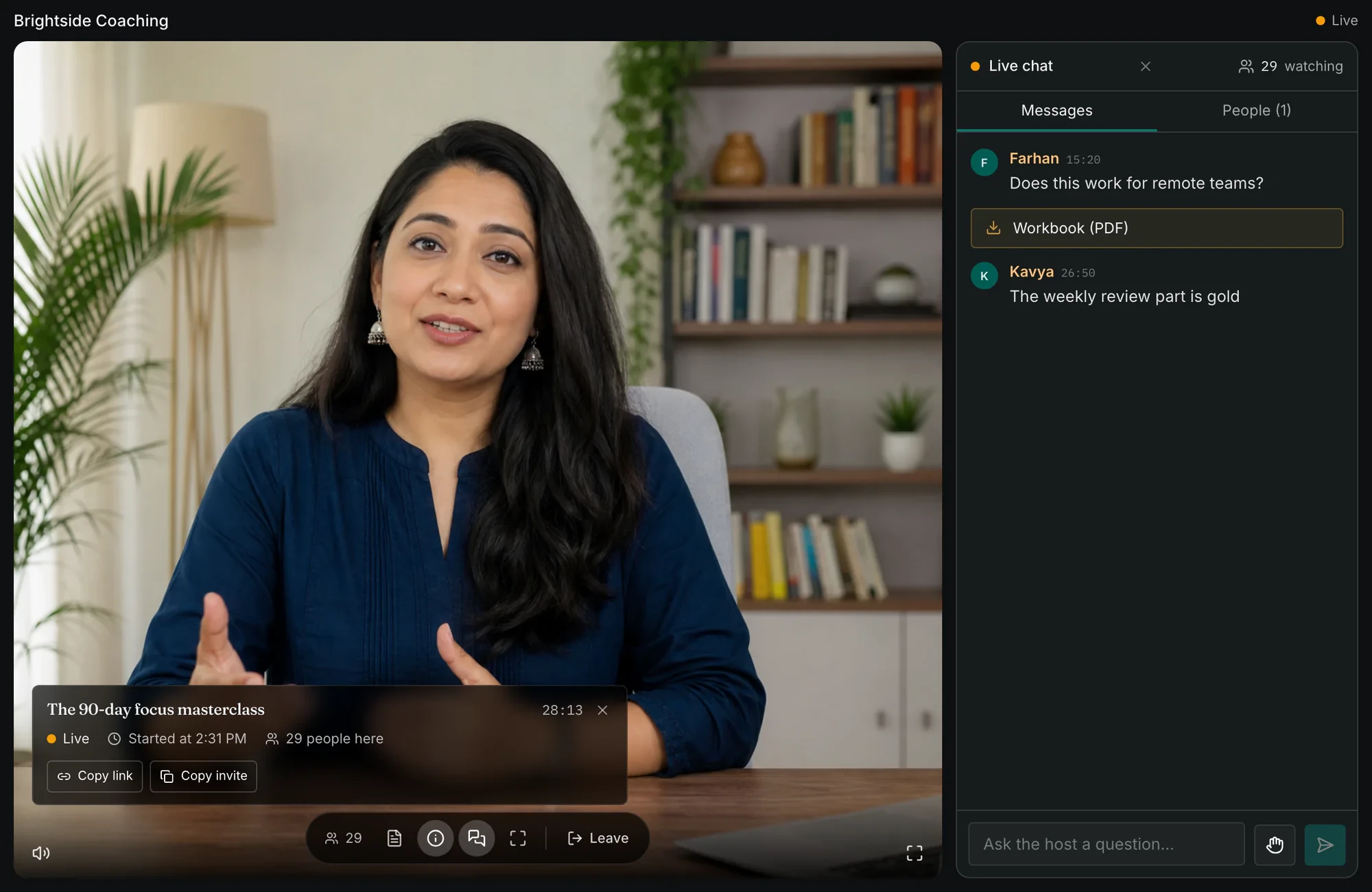
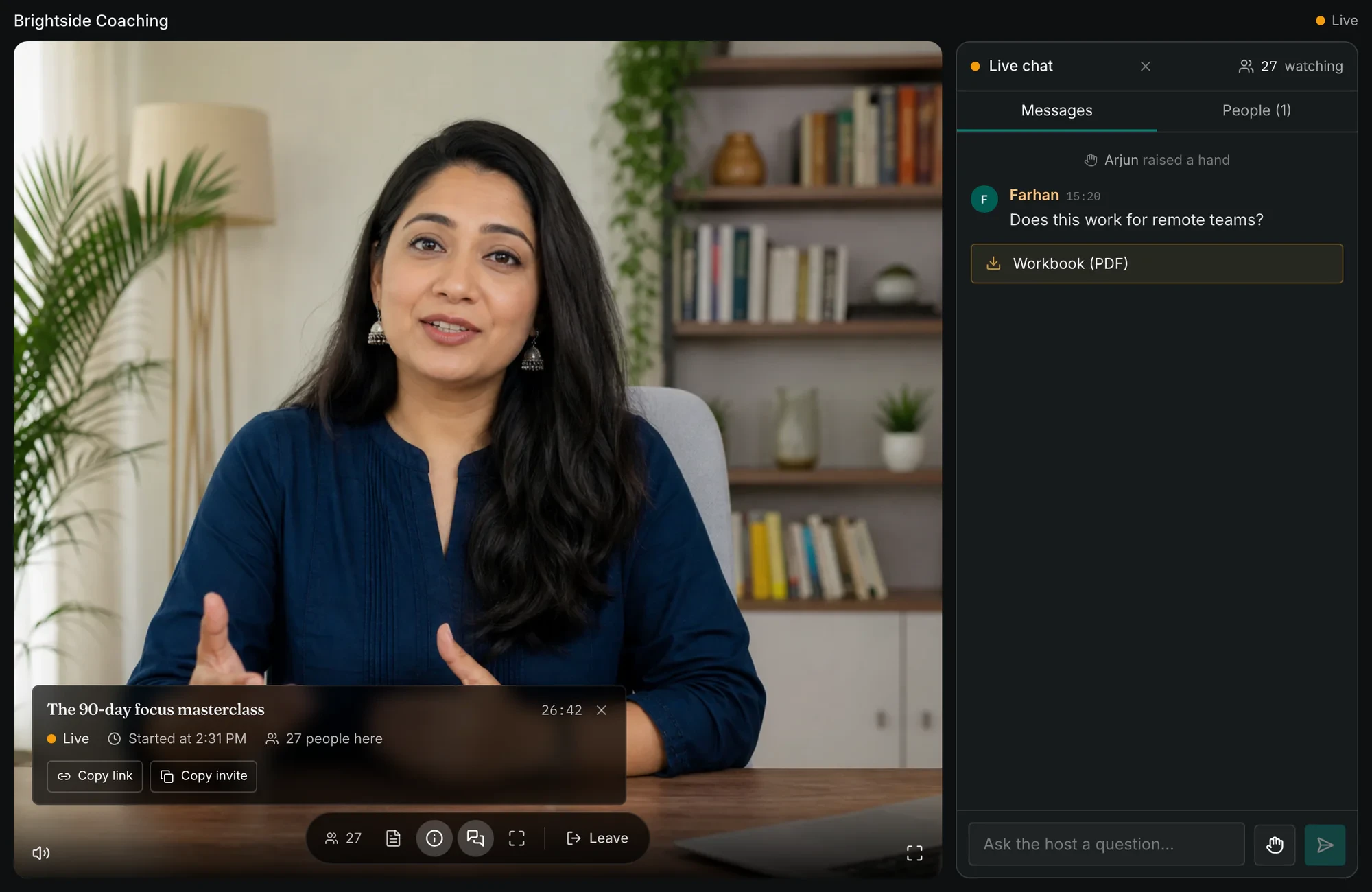
Everybody in a session is at the same moment of your video, because playback follows the session clock. Nobody skips to the price; everybody arrives to the same room.
- 01
They join at their time
The player starts at wherever the session has got to.
- 02
The room moves with them
Chat lands on its cue points and the headcount builds and thins.
- 03
It ends with a next step
An end card with your offer, a link, or the next session.
In practice
One clock for everybody
Every session has a start time, and the player works out where your recording should be from that clock — not from when a particular person pressed play. Somebody arriving six minutes late joins at minute six, and everybody in the session is at the same moment of your talk.
Why there is no seek bar
A recording that can be skipped gets skipped to the price. The room has no fast-forward handle and no way to drag ahead, so the story you tell is told in the order you tell it, and the offer arrives after the reasons for it.
A room laid out your way
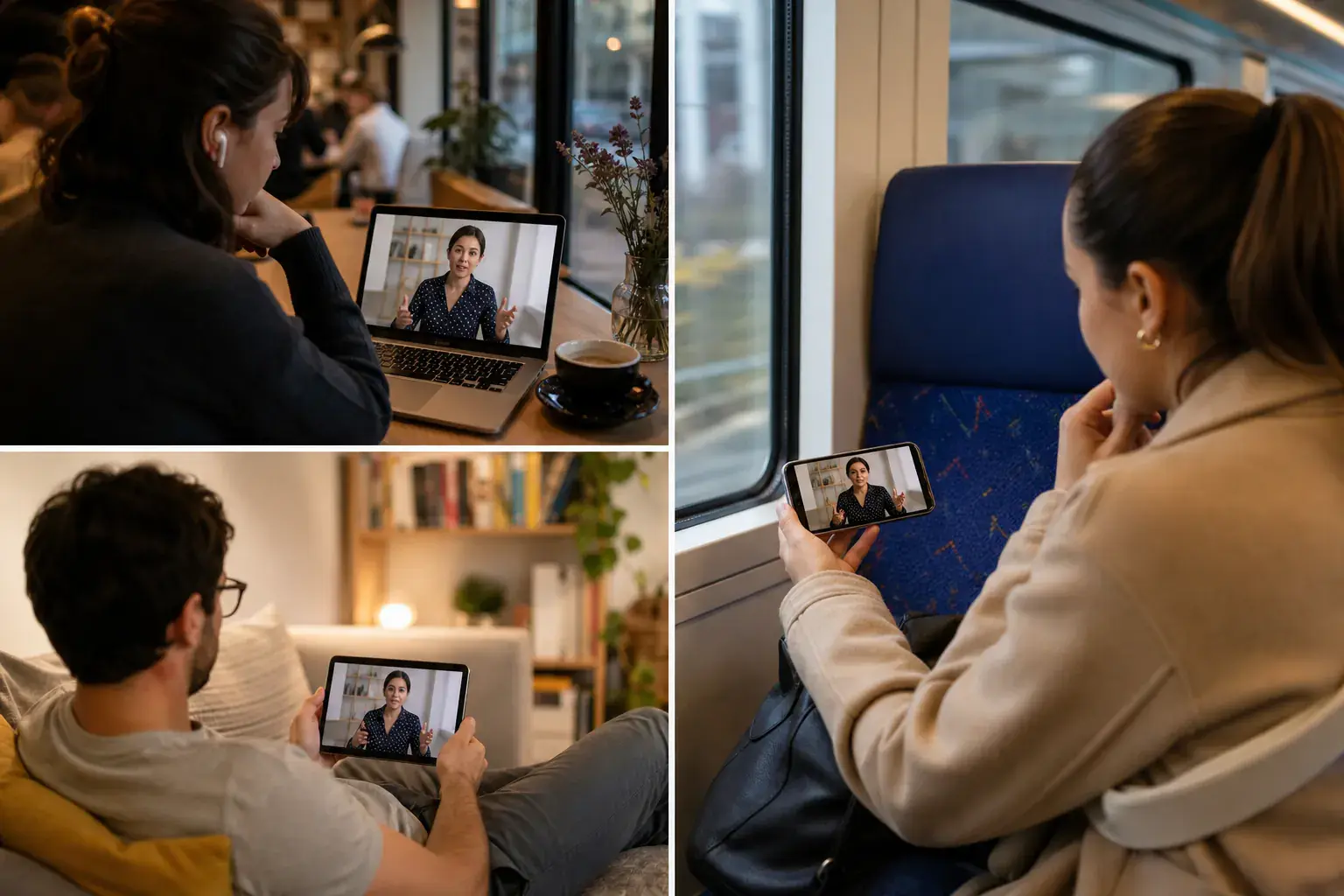
On a wide screen the chat can sit in a column beside the video, or float over it and be closed so the recording has the whole window. On a phone it is a sheet under the video that never covers it. Before the start there is a waiting screen with optional pre-roll video and music; after the end, an end card with your next step.
What it includes
- Time-synced player
- Playback is computed from the session start, so a late arrival joins where the session has got to.
- No scrubbing, by design
- There is no fast-forward handle, so your offer lands where you put it.
- Raised hands and real questions
- Attendees can chat and raise a hand; both reach your inbox.
- A believable headcount
- A count that builds and wobbles the way a real one does, with names if you want them.
- Pre-roll and waiting audio
- Something to watch and hear while people wait for the start.
- Chat beside or over the video
- A docked column or an overlay that can be closed — your choice per webinar.
Questions
Do attendees know it is a recording?
You decide how to describe it. Cued plays your recording on a synced clock; most people call it a session that starts every few minutes.
Does it work on phones?
Yes. On a phone the chat sits in a sheet under the video, and focus mode keeps both on screen.
What if somebody arrives very late?
You set how late a newcomer can join. Past that, the room offers them the next session instead of the last few minutes.
Does it need anything installed?
No. Attendees join in the browser from the link in their email, on a laptop or a phone.
Try it on your own recording
Fourteen days with everything switched on, no card.